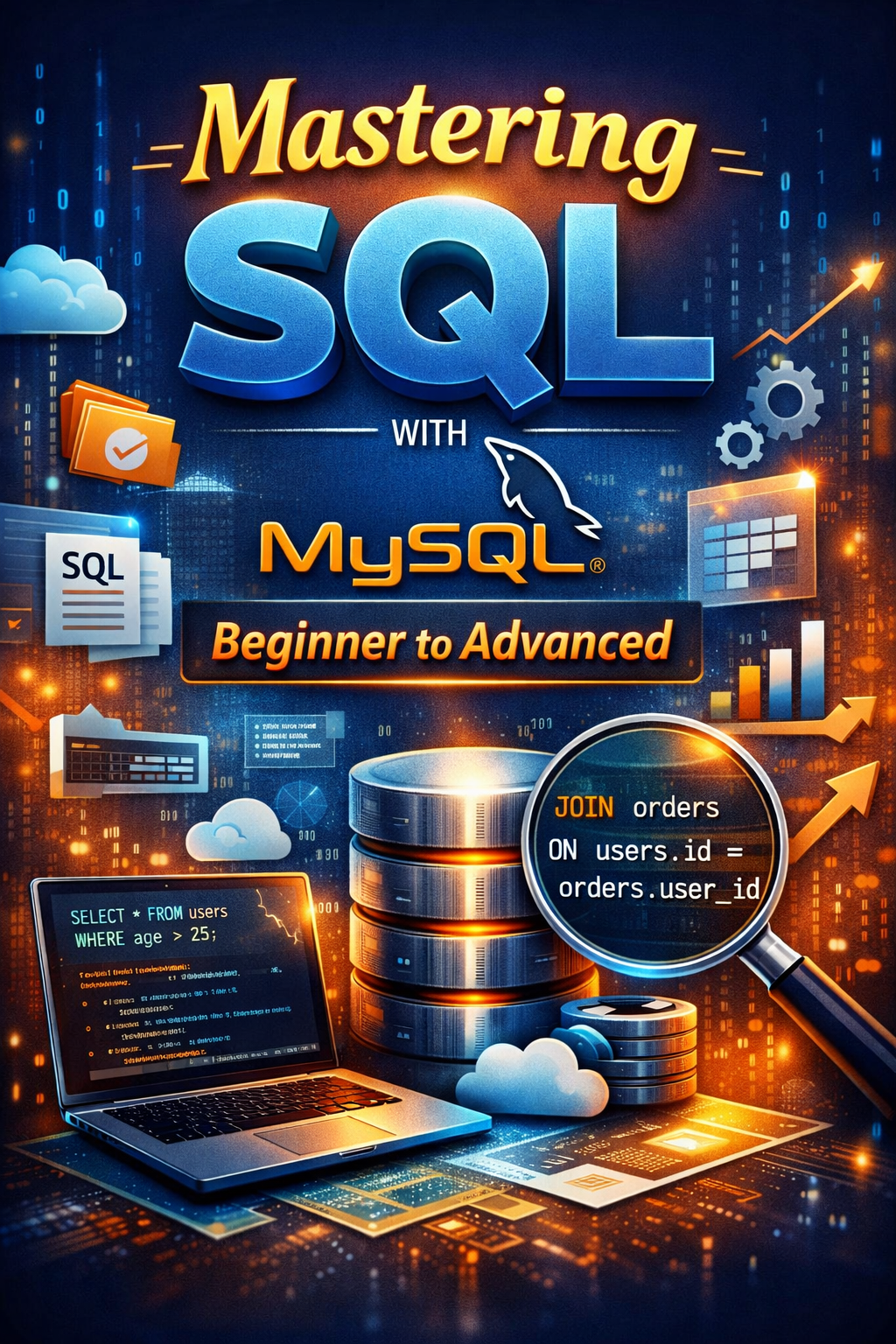
Mastering SQL with MySQL: Complete Beginner to Advanced Course Guide (2026)
Master SQL with MySQL step by step. Beginner to advanced course guide with real-world skills, career benefits, and learning roadmap for 2026. In the modern digital ecosystem, data plays a critical role in decision-making, automation, and application development. Every website, mobile app, software platform, and online service relies on databases to store and process information. To work efficiently with databases, one skill stands above the rest — SQL.
SQL (Structured Query Language) is the backbone of relational database systems, and among all database technologies, MySQL remains one of the most widely used and trusted platforms worldwide. From startups to global enterprises, MySQL powers countless applications across industries.
For learners who want to build strong database skills from scratch and progress toward advanced expertise, the Udemy course “Mastering SQL with MySQL: From Basics to Advanced” offers a structured and practical learning path. This course focuses on clarity, hands-on practice, and real-world database usage, making it suitable for both beginners and working professionals.
This in-depth article explains what the course covers, why SQL and MySQL matter in today’s job market, who should enroll, and how mastering these skills can unlock long-term career growth.
Why SQL Is a Must-Have Skill in 2026 and Beyond : Mastering SQL with MySQL
SQL is not just another programming language — Mastering SQL with MySQL, it is a universal standard for working with relational databases. Regardless of whether you are a developer, analyst, engineer, or business professional, SQL allows you to interact directly with stored data.
With SQL, you can:
- Extract meaningful information from massive datasets
- Add, modify, or remove records safely
- Organize data efficiently using tables and relationships
- Perform calculations and summaries for reporting
- Optimize databases for speed and reliability
What makes SQL especially valuable is its cross-platform relevance. Once you understand SQL fundamentals, you can apply them to MySQL, PostgreSQL, SQL Server, Oracle, and other database systems with minimal adjustments.
MySQL is often the first choice for learners because it is open-source, widely supported, and used in real production environments. Learning SQL with MySQL gives you practical experience that directly translates into real-world jobs.
Course Overview: Learning SQL with MySQL Step by Step :Mastering SQL with MySQL
The “Mastering SQL with MySQL: From Basics to Advanced” course is designed to eliminate confusion and help learners progress logically. Instead of overwhelming students with theory, the course builds concepts gradually while reinforcing them through practice.
Core Learning Stages in the Course: Mastering SQL with MySQL
1. SQL and Database Foundations
The course begins with the basics, ensuring learners fully understand:
- What relational databases are
- How tables store structured data
- How rows, columns, and keys work together
- The role of SQL in database interaction
This foundation is crucial, especially for beginners who have never worked with databases before.
2. Creating and Managing Databases
Once the basics are clear, learners move on to database creation and management, including:
- Creating databases and tables
- Choosing appropriate data types
- Defining primary keys and constraints
- Understanding database structure and integrity
These lessons teach how professional databases are designed rather than just how queries are written.
3. Writing Essential SQL Queries
This section focuses on everyday SQL operations used in real jobs:
- Retrieving data using SELECT statements
- Filtering results using conditions
- Sorting and limiting output
- Inserting new records
- Updating existing data
- Deleting unwanted records safely
By practicing these commands, learners gain confidence in handling real datasets.
4. Working with Multiple Tables
Modern databases rarely consist of a single table. This course explains how to:
- Connect tables using relationships
- Use different types of joins
- Combine data from multiple sources
- Avoid duplicate or inconsistent records
This part of the course is essential for understanding how complex systems store data efficiently.
5. Advanced SQL Techniques
As learners progress, the course introduces advanced topics such as:
- Subqueries and nested queries
- Aggregate functions for calculations
- Grouping and summarizing data
- Conditional logic within SQL
These skills are commonly tested in interviews and used in professional environments.
6. Database Performance and Optimization
Poorly written queries can slow down applications. This course explains:
- How indexing improves query speed
- Best practices for writing efficient SQL
- How to handle large datasets
- Techniques for optimizing database performance
These lessons help learners think like database professionals rather than beginners.
Coupon code: EDB38E969D59FE86B903
Practical Learning with Real-World Examples
One of the strongest aspects of this course is its hands-on approach. Instead of only watching videos, learners actively practice SQL queries and database operations.
You will:
- Work with realistic database examples
- Solve practical query problems
- Understand common mistakes and how to fix them
- Apply SQL concepts in scenarios similar to real jobs
This practice-driven method ensures long-term retention and real skill development.
Who Should Take This SQL and MySQL Course?
This course is designed for a broad audience, making it valuable across multiple career paths.
Beginners with No Technical Background
If you are new to databases or programming, this course starts from the absolute basics. Concepts are explained clearly, making it easy to follow even without prior experience.
Students and Fresh Graduates
SQL is one of the most requested skills in entry-level tech roles. Students who complete this course gain a strong advantage in:
- Campus placements
- Technical interviews
- Internship opportunities
Software and Web Developers
Developers frequently interact with databases. This course helps developers:
- Write efficient backend queries
- Understand database structure deeply
- Reduce application errors related to data handling
SQL knowledge improves both backend and full-stack development capabilities.
Data Analysts and Business Analysts
Data professionals rely heavily on SQL for:
- Extracting reports
- Cleaning and transforming data
- Supporting business decisions
This course provides the exact SQL skills needed for analytics roles.
Working Professionals Seeking Career Growth
Professionals from non-technical backgrounds can also benefit. SQL is widely used in:
- Operations
- Finance
- Marketing analytics
- Reporting roles
Learning SQL opens doors to higher-paying, data-oriented positions.
Key Skills You Gain After Completing the Course
By the end of this course, learners develop a strong technical toolkit, including:
- Confidence in writing complex SQL queries
- Ability to design structured relational databases
- Skills to join and analyze data across multiple tables
- Knowledge of performance tuning and optimization
- Practical problem-solving ability using SQL
These skills are directly applicable to real-world work environments.
Why This Course Stands Out from Other SQL Courses
Many online SQL tutorials focus only on syntax. This course goes further by teaching how and why SQL works, not just what commands to type.
Clear Learning Path
The content is organized logically, ensuring learners are never confused or overwhelmed.
Practical Focus
Every concept is supported by examples and exercises, bridging the gap between theory and practice.
Beginner-Friendly Yet Advanced
The course grows with the learner, starting simple and progressing to advanced topics smoothly.
Lifetime Skill Value
SQL is a timeless skill. Once mastered, it remains useful across industries and technologies.
Career Opportunities After Learning SQL and MySQL
SQL remains one of the most in-demand skills across the global job market. Professionals with strong SQL knowledge are hired for roles such as:
- Data Analyst
- Business Intelligence Analyst
- Backend Developer
- Database Administrator
- Data Engineer (entry-level)
As organizations increasingly rely on data-driven decisions, SQL expertise becomes more valuable every year.
Long-Term Benefits of Mastering SQL
Learning SQL is not just about landing a job — it’s about building a foundation for long-term growth.
With SQL skills, you can:
- Transition into advanced data roles
- Learn big data technologies more easily
- Understand how enterprise systems work
- Make informed technical decisions
SQL often acts as a gateway skill to data science, cloud computing, and analytics careers.
Final Conclusion
If you are serious about learning databases the right way, “Mastering SQL with MySQL: From Basics to Advanced” is a powerful learning resource. It combines beginner-friendly explanations with advanced concepts, practical exercises, and real-world relevance.
This course does more than teach SQL commands — it builds a deep understanding of how data systems function. Whether you are a student, developer, analyst, or career switcher, mastering SQL with MySQL can significantly strengthen your professional profile and future opportunities.
In a world driven by data, SQL is not optional — it is essential. And this course provides a clear, structured, and effective path to mastering it.
 Click here to enroll – The Complete HTML Course 2025 – Learn HTML from Scratch with Masterclass
Join now and start building your first project today!
Make the next 30 days the most productive coding days of your life. By the end, you’ll not only understand JavaScript – you’ll be able to build almost anything with it.
Please Join in WHATSAPP GROUP
Please Join in TELEGRAM GROUP
If anyone have interest on GOVT jobs – Please click on this below link
GOVT JOBS